BestColdEmailSoftwarein2026:TopPlatformsCompared
A plain-English, data-backed guide to cold email software: how the platforms work, how Emailchaser, Instantly, and Smartlead stack up, and why clean data decides whether any of them deliver.

Robby Frank
Founder & CEO

Disclosure: Emailchaser, Prymatica, and 1Lookup are all owned by Momentum Labs, so we have a financial interest in both Emailchaser and Prymatica. We rank Emailchaser first because we think it fits most teams best, but weigh that against the alternatives below yourself.
Cold email gets dismissed right up until it works. One person with a warmed-up inbox and a clean list can book more qualified meetings in a month than a quarter of paid ads, at a fraction of the cost. The same person with a dirty list can wreck a domain's reputation in a week and spend months digging out.
The software you pick sits in the middle of that outcome. This guide covers what cold email platforms actually do, how they work under the hood, how the leading tools compare in 2026, and the thing most "best cold email software" roundups skip entirely: the quality of the data you feed in, which decides whether any platform on this page gets you a single reply.
Why your data decides every cold email campaign
Cold email looks like a copywriting problem. It's mostly a data problem. On a typical unverified B2B list, something like a third of the addresses are risky or unsendable: invalid, catch-all, role-based, or outright spam traps that exist only to flag senders who didn't scrub. Mailbox providers don't grade your subject lines. They grade your bounce rate and complaint rate, and once bounces cross roughly 2%, Google and Microsoft start routing you to spam. Not just the bad sends. Everything from that domain.
A spam trap or disposable address can't reply and can't convert. What it can do is get your domain blocklisted, and that damage takes months to undo.
Get the list right and the channel compounds: you reach real people, sender reputation improves, inbox placement climbs campaign over campaign. Get it wrong and the best platform in the world just delivers your bounces faster. Keep that in mind through the comparisons below, because we come back to it.
What cold email software actually does
A cold email platform sends personalized outreach to people who don't know you yet, at scale, without the messages looking like a blast and without wrecking the inbox you send from. It is not a newsletter tool. Mailchimp and its cousins are built for opted-in subscribers and will suspend you for cold sending. Cold email software is purpose-built for outbound.
The good ones bundle four jobs that used to take four separate tools. Sending infrastructure: connect a pile of mailboxes, rotate sends across them, pace the volume so no single inbox looks automated. Warmup: exchange and read "real-looking" mail automatically so each inbox builds a reputation before you point campaigns at it. Sequencing: follow-ups that keep firing until someone replies, with merge fields and A/B tests. And a unified inbox, because once you're running 20 mailboxes, a hot reply buried in mailbox number 14 is a deal you never knew you lost.
The best of the current crop add a fifth job: lead finding and verification built in, so you can source prospects and clean them without bolting on yet another subscription.
How a cold email platform works
The mechanics matter, because each step is somewhere a campaign can die.
- Connect mailboxes. Cold senders never blast from the primary company domain. You buy secondary domains and set up inboxes on them (often several per domain), so if a reputation takes a hit, your real email is untouched.
- Warm them up. A new inbox can't send hundreds of cold messages on day one without getting flagged, so the platform ramps volume gradually while simulating genuine engagement.
- Upload and verify a list. Prospects come in with names, companies, and merge fields. Good platforms check deliverability here and drop the addresses that would bounce.
- Build a sequence. A first touch plus two to four follow-ups, personalized with merge tags and often spintax, which rotates phrasings so every send is slightly different.
- Send, paced and rotated. Messages go out across your mailboxes at human-looking volumes and intervals, not all at once.
- Work the replies. Positive replies, out-of-offices, and unsubscribes get sorted into one inbox so your team handles opportunities instead of digging through mailboxes.
Two things follow. Deliverability is the whole game: warmup, volume, and list quality decide whether you hit the inbox or the spam folder. And the platform can only deliver to addresses that actually exist, which is why verification up front is not optional.
What separates the best cold email platforms from the rest
Most tools can send a sequence. At scale, the differences that matter are narrower.
Deliverability infrastructure comes first: native warmup, mailbox rotation, volume controls, spam testing. This is where reputations are made or lost. Then verification. A platform that checks addresses before sending protects you from yourself; one that doesn't will quietly let you bounce your way onto a blocklist.
After that it's practical questions. Does the master inbox actually hold up at ten or twenty mailboxes? Does the pricing model punish scale (per-inbox, per-seat) or reward it (flat, unlimited)? Is lead sourcing built in, and is that data verified or just big? And can your team actually run the thing, with support that answers when deliverability breaks the night before a launch?
Those are the six filters behind the rankings below.
The best cold email software in 2026
The platform you pick determines your deliverability, your costs as you scale, and how much of the workflow lives in one place versus five. Here's how the field stacks up, with the option we'd point most teams to first.
| Platform | Best for | Standout | Pricing (2026) | Watch-out |
|---|---|---|---|---|
| Emailchaser | All-in-one at flat, unlimited-inbox pricing | Lead Finder, double verification, Master Inbox, and a CRM in one tool | Flat per-workspace, unlimited seats; ~$47 Starter (up to 30 inboxes) to ~$297 Professional (unlimited inboxes) | No native warmup (a deliberate design choice), so ramp new domains carefully |
| Instantly | High-volume senders who want warmup and data in one | Unlimited inboxes and warmup; 450M+ lead database; AI Copilot | Tiered by sending volume; Outreach from ~$47/mo, with Leads and CRM priced separately | Healthy warmup scores can still land in spam; lead-data quality varies |
| Smartlead | Agencies and technical teams sending at scale | Unlimited inboxes, open API, white-label client workspaces; now adds prospecting and a dialer | From ~$39/mo, tiered by volume; many capabilities are paid add-ons | Steeper learning curve; add-ons inflate the true monthly cost |
| Lemlist | Personalized, multichannel sequences | lemwarm warmup plus email, LinkedIn, and calling in one; 600M+ database | Per-seat from ~$69/user/mo; extra mailboxes ~$9 each | Per-seat plus per-mailbox gets costly at volume; LinkedIn runs via a Chrome extension |
| Apollo | Data-first prospecting plus outreach | 210M+ contact database, dialer, buyer intent, and a free tier | Per-seat from ~$49/user/mo plus credits; free plan available | Data accuracy drops outside North America, so verify before sending |
| Woodpecker | Deliverability-focused SMBs and agencies | Warm-up, Bounce Shield, and ESP matching; unlimited inboxes and seats | Priced by monthly contacted prospects, from ~$24/mo | Cost scales with volume and there's no rollover; LinkedIn is an add-on |
Pricing reflects each provider's publicly listed or commonly reported 2026 rates; cold email tools change pricing often, so confirm current numbers on their sites.
 Emailchaser: best overall for most teams (our sister product, see the disclosure above). Emailchaser is the one we'd hand to a founder or a lean agency that wants the whole workflow in one tool without per-seat math. It rolls up what usually takes three or four subscriptions: a built-in Lead Finder with LinkedIn and Apollo-style sourcing, double email verification that catches risky addresses before they bounce, multi-step campaigns with AI spintax for natural variation, a Master Inbox that pulls every reply into one view, and a lightweight sales CRM. Pricing is its sharpest edge. Plans are flat per-workspace with unlimited seats, and the top tier adds unlimited email accounts, so scaling gets cheaper per inbox instead of more expensive. That's backwards from most of the market, in a good way. Know the trade-off: there's no native warmup (a deliberate design choice), so ramp new domains carefully. Two transparent tiers, a real free trial, and onboarding through "Emailchaser University" make it the most approachable of the serious options. Its built-in verification also matches the principle this whole guide is built on: clean data first, sending second.
 Instantly. The easiest on-ramp in the category. Unlimited mailboxes with warmup, a 450M+ lead database, and an AI "Copilot" that gets a first campaign live fast; a solo founder can go from signup to sending in an afternoon. Watch the bill as you add features and data credits, and know that a healthy warmup score doesn't guarantee inbox placement. Some heavy senders outgrow it as volume climbs.
 Smartlead. The power tool for agencies and technical teams. Unlimited inboxes, serious warmup, an open API that covers nearly everything, and white-label workspaces that keep client accounts cleanly separated; it has been adding prospecting and a dialer on top. The learning curve is real and the add-ons inflate the true monthly cost, so it rewards operators who already live in cold email more than first-timers.
 Lemlist. Built for personalization over volume: email, LinkedIn steps, and calling in one sequence, plus dynamic images and landing pages, lemwarm warmup, and a 600M+ contact database behind it. Pick it when bespoke sequences to a narrow list matter more than raw sending capacity. Per-seat pricing plus ~$9 per extra mailbox adds up for larger teams, and LinkedIn runs through a Chrome extension.
 Apollo. Less a sender than a 210M+ contact database with sequencing attached. Start here if prospecting data is your bottleneck; the dialer, buyer-intent signals, and free tier sweeten it. Its deliverability tooling is thinner than the purpose-built senders', and data accuracy drops outside North America, so heavy senders often pair it with a dedicated sending tool and verify everything before it goes out. (If you want the same prospecting data without per-seat plans, 1Lookup's Prospect Search queries it pay-per-search, and B2B Contact Append reveals verified work emails per contact.)
 Woodpecker. The no-drama veteran. Warm-up, Bounce Shield, ESP matching, condition-based follow-ups, and unlimited inboxes and seats, priced by how many prospects you contact each month (from ~$24/mo). Deliverability-minded SMBs and agencies like it because it just runs. It's less feature-dense than the newer all-in-ones, cost scales with volume with no rollover, and LinkedIn is an add-on.
Emailchaser is the one we link out to because it's where we'd put most teams; the rest are here so you know the field. Whichever you choose, the same rule applies every time: the platform can only deliver to addresses your data says are real.
The part most comparisons skip: clean data decides everything
You can pick the best platform on this list, write a great sequence, and still flush the budget if the list is dirty. Every campaign is gated by the quality of the addresses you load, and this is where most programs quietly leak. It's also where domains quietly die.
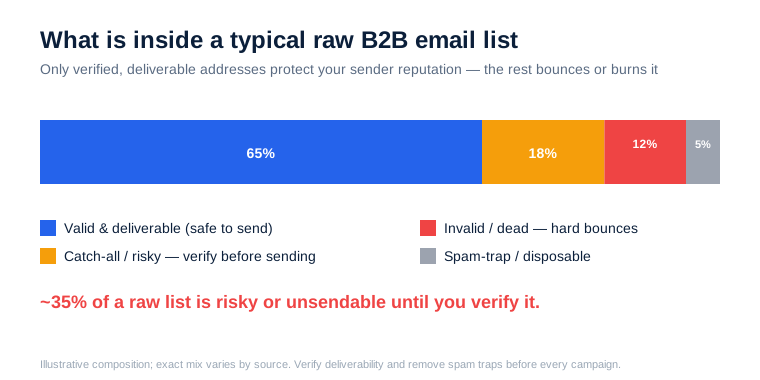
Three data problems do the damage. Invalid and dead addresses bounce, full stop, and past roughly 2% bounces mailbox providers start filtering every message from your sending domain to spam. Spam traps and disposable addresses exist specifically to catch senders who don't scrub; hit one and you risk a blocklisting that no amount of warmup undoes quickly. And catch-all or role-based addresses ("info@", "sales@", domains that accept anything) are low-intent and high-risk, so you at least want to know which is which before you send.
This is the work 1Lookup is built for: real-time email validation that flags whether an address is deliverable, catch-all, role-based, disposable, or a likely trap. The source data is direct and updated constantly, not recycled from old lists. Run prospects through validation before a campaign and two things happen at once. Inbox placement climbs because you're only sending to real, reachable people. And your domain reputation stays intact because the addresses that would have burned it are gone. For a deeper look at choosing a verification provider, see our email validation service comparison; if your outreach also spans phone, the same logic drives ringless voicemail.
Clean data isn't a feature you bolt onto cold email. It's the foundation, and it's why the platforms we rank highest are the ones that verify before they send.
How to run a cold email program that actually lands
Put the pieces together and a high-performing, low-risk program looks like this:
- Verify first, always. Run every list through email validation and drop invalids, traps, and disposables before a single send. Your domain is the asset everything else depends on.
- Send from secondary domains. Keep your primary company domain out of the line of fire entirely.
- Warm up and pace. Let the platform ramp volume and rotate mailboxes. Patience here is what keeps you in the inbox.
- Keep it short and human. Merge fields and spintax help every send read like it was written for one person.
- Work the unified inbox fast. The whole point is the reply. Answer positive responses within minutes, not days.
- Measure deliverability, not just opens. Bounce rate, reply rate, spam placement. Tighten the list and the copy based on what those numbers say.
Frequently asked questions
What is the best cold email software in 2026?
For most founders, small teams, and lean agencies, Emailchaser is the strongest all-in-one: lead finding, built-in verification, sequencing, and a master inbox at flat, unlimited-inbox pricing. Instantly is the easiest on-ramp for solo senders. Smartlead is the power tool for high-volume, technical, agency setups.
Can I just use Mailchimp or my normal email tool for cold email?
No. Newsletter and transactional tools are built for opted-in contacts and will suspend accounts for cold sending. Cold email needs its own infrastructure (secondary domains, warmup, mailbox rotation) that those tools don't provide.
Why do my cold emails land in spam?
Almost always fundamentals: a cold, un-warmed domain, too much volume too fast, or (most commonly) a dirty list driving bounces and complaints. Verify the list, warm the inboxes, pace the sends. Placement improves quickly.
Do cold email platforms verify emails for me?
The better ones do; Emailchaser includes double verification, for example. Coverage and strictness vary, though. For high-stakes or large lists, a dedicated validation pass first (the way 1Lookup does it) is the safest way to keep bounces under control.
Is cold email legal?
B2B cold email is legal in much of the world when done correctly: accurate sender info, a real opt-out, relevant targeting. CAN-SPAM governs the US; GDPR adds consent and legitimate-interest rules in the EU. This is general information, not legal advice, so confirm specifics for your audience with qualified counsel.
Start with clean data
The best cold email software rewards teams who treat data as the foundation, not an afterthought. Pick a platform that verifies before it sends (Emailchaser is our top recommendation), then verify your list before every campaign anyway, so you only spend on real, reachable addresses. Try 1Lookup's email validation to check deliverability, catch-alls, disposables, and traps in real time. Hiring out instead of running it yourself? A cold email agency like Prymatica runs the whole program for you, and our guide to the best cold email outreach agencies compares it against the rest of the field.
Related reading: before your first send, run the list through a full validation pass. The bulk email validation guide covers deduplication, caching and what the verdicts actually mean.
Meet the Expert Behind the Insights
Real-world experience from building and scaling B2B SaaS companies

Robby Frank
Head of Growth at 1Lookup
"Calm down, it's just life"
About Robby
Self-taught entrepreneur and technical leader with 12+ years building profitable B2B SaaS companies. Specializes in rapid product development and growth marketing with 1,000+ outreach campaigns executed across industries.
Author of "Evolution of a Maniac" and advocate for practical, results-driven business strategies that prioritize shipping over perfection.