Area Code Lookup
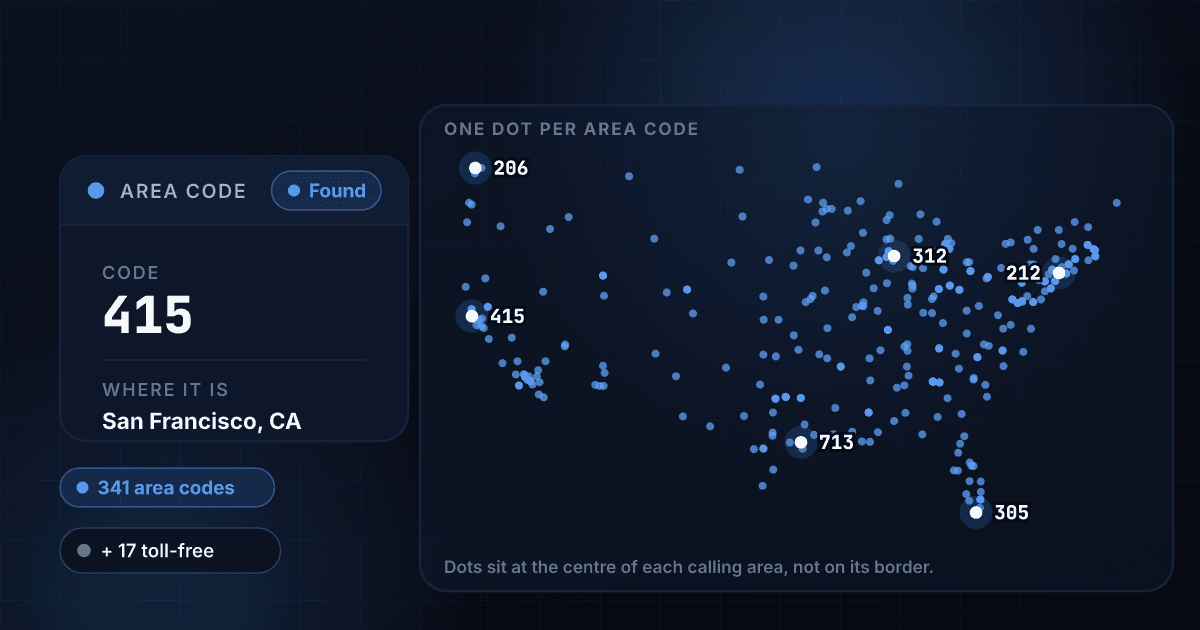
An area code is the first three digits of a 10-digit US phone number and identifies the region the number was assigned in. There are 348 codes in the US portion of the North American Numbering Plan, including 7 toll-free codes that have no location at all. Find any code below, or enter a full number to see who is calling.
Look up a phone number
Area codes by state
Every geographic US area code, grouped by the state it serves. Open a code to see the city it covers and look up a number from it.
Alaska1 code
American Samoa1 code
California37 codes
Delaware1 code
District of Columbia1 code
Guam1 code
Hawaii1 code
Maine1 code
Montana1 code
New Hampshire1 code
North Dakota1 code
Northern Mariana Islands1 code
Rhode Island1 code
South Dakota1 code
U.S. Virgin Islands1 code
Vermont1 code
Wyoming1 code
Frequently asked questions
How do I look up an area code?
Find the code in the list below and open its page, or enter a full 10-digit number in the lookup at the top. The area code is the first three digits of a US phone number, after the country code 1.
What area code is this number?
The area code is the first three digits of the 10-digit number. In (415) 555-0132 the area code is 415, which covers San Francisco, California. Enter the full number above and the lookup will tell you where it is registered and what kind of line it is.
Does an area code tell me where someone is?
It tells you where the number was assigned, not where the person is. Mobile numbers keep their original area code when their owner moves, so a 212 number may be answered in Denver. Caller ID can also be spoofed outright.
Which area codes are toll-free?
800, 833, 844, 855, 866, 877 and 888 are the toll-free codes in active use. They are not geographic, so a toll-free call can come from anywhere and costs the person called nothing. A few other prefixes (822, 880 to 887 and 889) are held in reserve for future toll-free expansion and carry no calls today, which is why they have no page here.
Are certain area codes scams?
No US area code is inherently a scam code. The genuine risk is with international codes that look domestic, particularly some Caribbean codes in the North American plan, where returning a missed call can incur premium charges. The safe rule is never to call back a missed call from a code you do not recognise.
Why do some cities have several area codes?
Because they ran out of numbers. When a region exhausts its supply, the plan administrator either splits it geographically or lays a new code over the same area as an overlay. Overlays are why one neighbourhood can have two or three codes in use at once.
Area code assignments come from the North American Numbering Plan Administrator's published NPA and city reports. Codes are periodically split or overlaid, and the city shown on each page is the largest in that calling area rather than the only one. Caller ID can be spoofed and mobile numbers keep their original area code when their owner moves, so an area code indicates where a number was assigned, not where a caller is.