RealEstateSkipTracing:FindOwnerNumbers
How real estate skip tracing works, the workflow from property list to dialable owner numbers, what bulk skip tracing costs, and the compliance basics.

Robby Frank
CEO & Founder
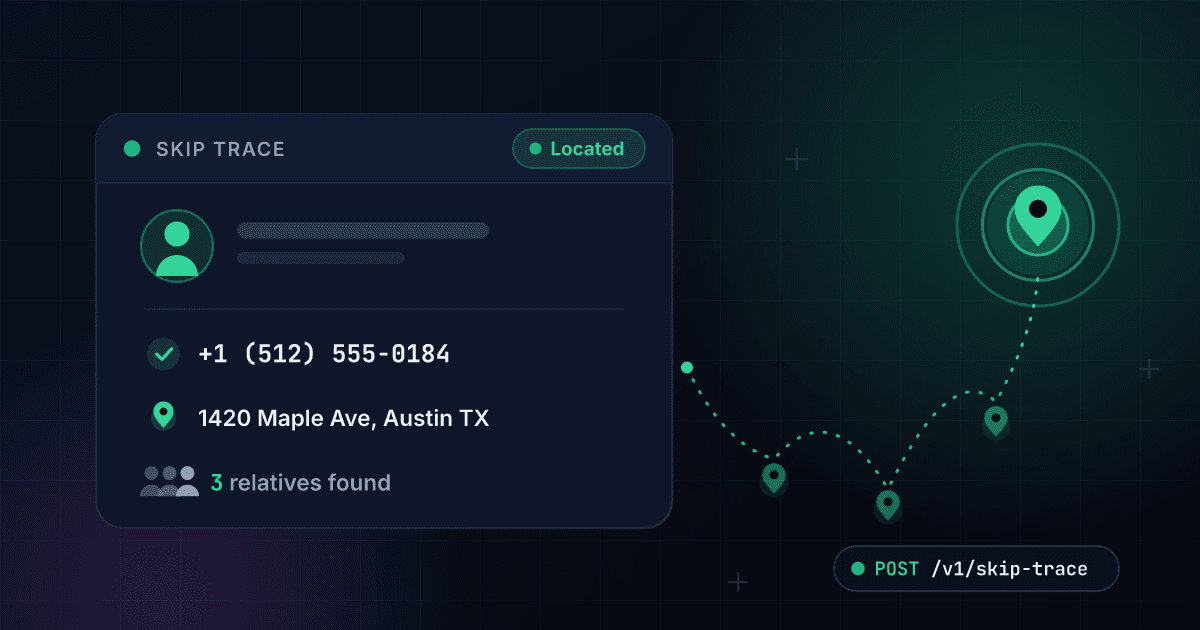
Real estate skip tracing turns a property address or an owner's name into current contact information, usually a phone number, so an investor can reach the owner directly instead of waiting for a listing. It is the step between building a property list and making the first call, and it is where most off-market deal flow actually starts.
This guide walks through how skip tracing works for real estate specifically, the workflow from raw list to dialable numbers, what bulk skip tracing costs, and the compliance basics that keep an outreach operation out of trouble. For the adjacent problem of keeping those numbers callable over time, see the guide on phone validation for real estate lead generation.
Where skip tracing fits in off-market deal flow
Off-market strategies share one shape: build a list of properties whose owners are likelier than average to sell, then contact those owners before anyone else does. Driving for dollars, absentee-owner lists, pre-foreclosure lists, tax-delinquent lists, probate lists, code-violation lists: all of them end with a stack of addresses and names, and none of them include a phone number.
Skip tracing closes that gap. A trace takes what you have (owner name, mailing address, property address) and returns what you need: phone numbers, and often email addresses and updated mailing addresses. The skip tracing API does this per record, with confidence scoring on each match, and the property lookup API can fill in ownership details when your list starts from addresses alone.
The real estate skip tracing workflow
- Build the property list. Pull from county records, list providers, or your own driving-for-dollars data. Deduplicate on the property address and normalize owner names; the same owner often appears across several distressed-property lists at once.
- Separate owner-occupied from absentee. The mailing address tells you which. Absentee owners are traced against the mailing address, not the property address, because that is where the owner actually lives.
- Run the trace. Submit records individually through the API as leads come in, or in bulk as a CSV batch when you process a whole list at once. Each record returns matched phones with confidence indicators, so you can sort strong matches from long shots.
- Validate before dialing. A traced number is a lead, not a guarantee. Running results through phone validation confirms which numbers are active and which are mobile versus landline, so your calling and texting split is right from the first attempt.
- Scrub before outreach. Check numbers against do-not-call data with a phone scrub before any cold calling or texting campaign, and keep records of when each list was scrubbed.
The teams that see the best contact rates treat steps 4 and 5 as part of tracing itself, not optional extras. A stack of unvalidated traces produces wrong-number conversations that burn callers out and burn phone numbers with carriers.
Bulk skip tracing: when and how
One-at-a-time tracing suits inbound leads and small lists. Once a list crosses a few hundred records, bulk is the only sane workflow: upload the whole file, let every record process, and get the results back as a single enriched CSV. The skip tracing API handles both shapes, and batch uploads start processing immediately rather than sitting in a queue.
On cost: skip tracing is priced per record, and with success-based billing you pay only when a trace returns a match. That pricing shape matters for real estate lists, where hit rates vary widely by list type. A fresh absentee list traces well; a years-old probate list will have more misses, and success billing means the misses are free.
Compliance basics for investor outreach
None of this is legal advice, but the outlines are well established. Cold calls and especially cold texts to consumers sit under the TCPA, and do-not-call registrations must be respected; the DNC glossary entry covers the moving parts. Practical hygiene for an investor operation:
- Scrub every list against DNC data before a calling or texting campaign, and re-scrub on a regular schedule rather than once at import.
- Prefer calling strong-confidence matches over blasting every returned number; volume without accuracy is what generates complaints.
- Keep records: when a list was traced, when it was scrubbed, and who was contacted when. If a dispute ever comes, the record is the defense.
- Honor opt-outs immediately and permanently, across every list you run.
Frequently asked questions
What information do I need to skip trace a property owner?
An owner name plus a mailing or property address is the standard input. More identifiers raise match quality: a prior phone number or an email tightens the match when common names would otherwise blur it.
How accurate is real estate skip tracing?
It depends on the list more than the tool. Recently active absentee owners match at high rates; long-vacant properties and estates trace worse because the underlying records are older. Confidence scores exist precisely so you can prioritize the strong matches first.
Is skip tracing legal for real estate investors?
Tracing itself, using public and commercially available records to locate an owner, is a long-established practice. The legal risk lives in the outreach, not the lookup: calling and texting rules under the TCPA, and do-not-call compliance. Scrub before you dial.
Should I trace a list before or after filtering it?
Filter first. Tracing is priced per record, so removing duplicates, junk records, and properties you would never buy before tracing directly cuts the cost of the trace.
Ready to turn a property list into conversations? Run your next list through the skip tracing API, or start with the free trial and trace a sample batch first.
Meet the Expert Behind the Insights
Real-world experience from building and scaling B2B SaaS companies

Robby Frank
Head of Growth at 1Lookup
"Calm down, it's just life"
About Robby
Self-taught entrepreneur and technical leader with 12+ years building profitable B2B SaaS companies. Specializes in rapid product development and growth marketing with 1,000+ outreach campaigns executed across industries.
Author of "Evolution of a Maniac" and advocate for practical, results-driven business strategies that prioritize shipping over perfection.